

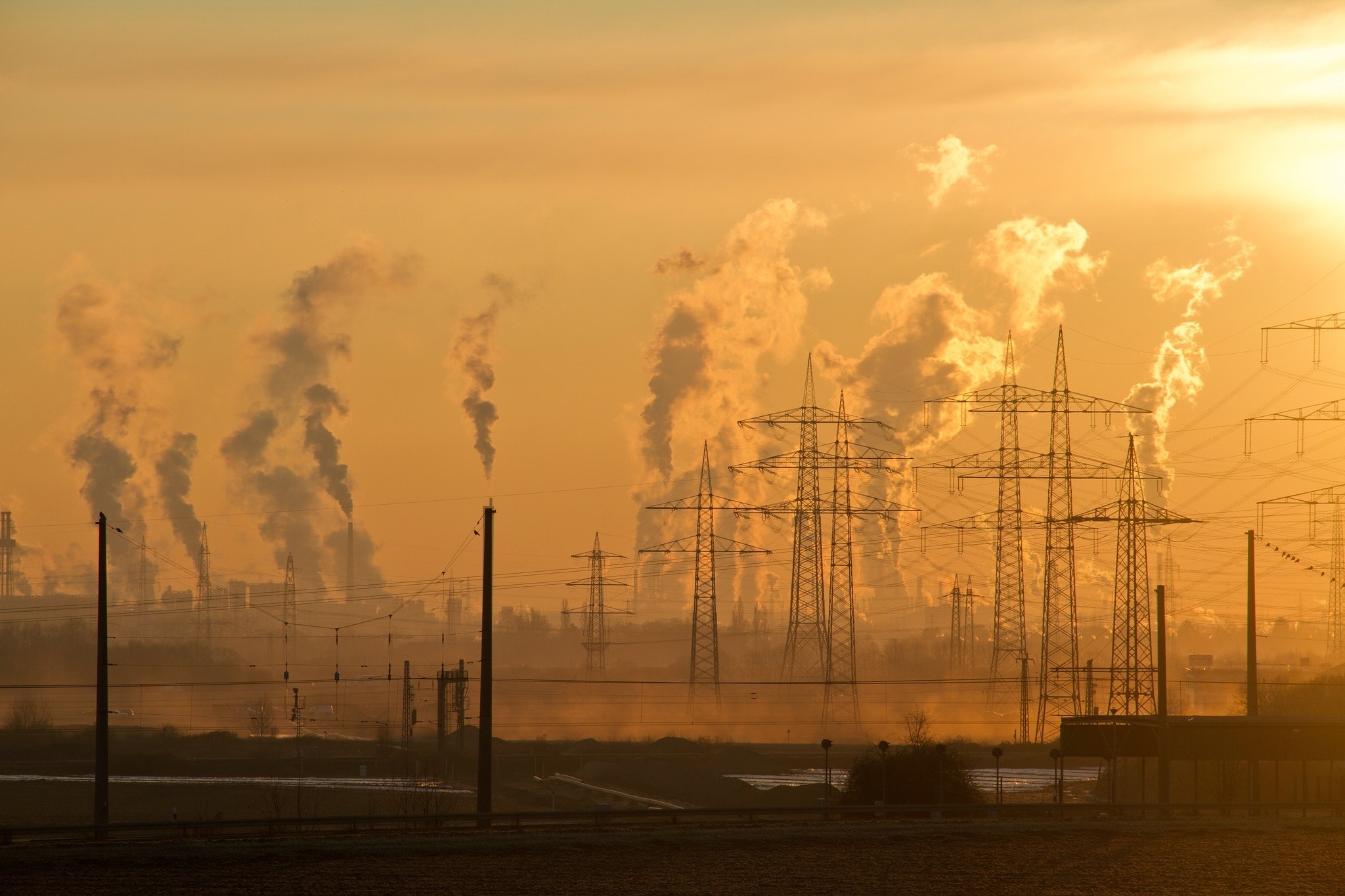
The case for carbon capture
The planet is still warming. As the threat of climate change continues to grow, we must react with faster decarbonization of our infrastructure. And while electrification and renewables are impactful and necessary steps, they aren’t a blanket solution due to several limits to their implementation.
- Some areas are difficult or impossible to support with renewable power due to their geography or politics, and regular spikes in electrical demand prevent renewables from supporting the entire grid without extensive power storage.
- Industrializing countries that need to provide heat, food, and housing for their people can’t afford a quick pivot off of fossil fuels.
- The electrification of key sectors like air travel, shipping, and heating is still developing, and is being implemented too slowly to meet climate goals.
- Key industrial processes like the production of steel, concrete, and paper generate CO2—and even the renewables we produce today are manufactured using dirty power.
For now, we need fossil fuels to meet these needs while we work to implement renewables as quickly and widely as we can. But even with the global power grid made as sustainable as possible, we’ll be left with areas where emissions or the use of fuels that produce them simply can’t be eliminated—and a whole lot of CO2 to clean up.
Carbon capture can patch this hole. We can not only collect emissions from ongoing industrial activity that is slow or impossible to decarbonize, but also actively remove them from the atmosphere to offset other areas of CO2 generation.
And this sequestered carbon isn’t just dead weight—we can even use it to make valuable products, in some cases making the process outright profitable.
These technologies are still developing. While some are already promising, others need more research or legislation to be implemented at scale—but the fundamentals of carbon capture and storage have been in use for decades.
Let’s take a look at the basic premise of carbon capture, and what we can do with all that CO2.
Traditional carbon capture and storage
Often abbreviated CCS, carbon capture and storage refers to the collection of CO2 created by industrial processes and its transport to underground storage. These technologies, which can sequester all CO2 emissions from a plant’s exhaust stream, are already in use at a commercial scale. There are three main types that a plant can be outfitted with: pre-combustion, post-combustion, and oxyfuel.
- Pre-combustion heats the fuel at high temperatures with steam and oxygen, forming a synthetic gas composed of hydrogen, CO2, and trace amounts of other gases. From here, the CO2 is easily separated and the remaining hydrogen-rich fuel can be cleanly burned. Although effective, this approach requires complex pre-treatment of fuel, which can be expensive—and it can’t be easily retrofitted onto older power plants.
- Post-combustion capture simply separates the CO2 from the existing exhaust of the industrial process. This can be less efficient, since the gas is less concentrated than in pre-combustion, but like the other methods, all CO2 can be sequestered in this manner. The main advantage of post-combustion is how easy it is to retrofit onto existing plants.
- Oxyfuel combustion burns fuel in oxygen instead of air, producing exhaust that is primarily water and CO2, which can be easily separated. However, this approach is fairly expensive due to the pure oxygen gas and specialized equipment required.
Once captured, the CO2 gas is chilled into its liquid state, in which it can be transported by pipelines. Like post-combustion capture technology, this is already a well-developed and safe practice. If the CO2 is destined for storage, it is injected into caves where it can be safely contained instead of released into the atmosphere. These reservoirs of CO2 can be expected to retain over 99% of their volume over 1000 years.
Although these methods of carbon capture are already in practice today, they fail to make additional use of the energy-intensive process that is capturing CO2. There are many methods of carbon utilization in various stages of development that improve on these current practices by either creating useful products from the sequestered CO2 or preventing additional carbon emissions later on.
Promising carbon utilization strategies
While there are many possible avenues towards utilizing sequestered CO2, there are some that are not only currently profitable or productive but positioned to improve. Some of these approaches would benefit from the natural development and reduced costs that would come from implementing them at scale—but some are already profitable, even taking into consideration the cost of CO2 capture, transfer, and storage.
Enhanced Oil Recovery: This technique allows CO2 to be pumped into the oil well, forcing up additional oil and sealing the gas below. This process simultaneously increases the return of oil and disposes of CO2, and is already profitable and in use commercially—but while it does sequester carbon, it also draws out additional fossil fuels, which must in turn have their emissions captured.
Chemical Production: Catalysts and chemical reactions allow carbon dioxide to be recycled into useful compounds, such as chemical feedstocks and building materials which permanently sequester the carbon. Although the demand is limited, this process is already profitable.
Cement Curing: CO2 can be used in the manufacture of cement, a process which not only sequesters it directly within the building material, but also greatly decreases the emissions of the cement’s production overall in comparison to traditional cement manufacture. Like chemical production, this method of carbon utilization is already profitable, and may increase in relevancy as urbanization accelerates.
Agricultural Use: Various agricultural techniques involve directly sequestering CO2 in the soil of fields, which also improves the quality of the soil for farming. These methods are already profitable in their current state.
Forestry: As vegetation grows, it sequesters CO2 from the atmosphere inside itself. The planting of new forests and sustainable maintenance of existing forests could contribute greatly to capturing CO2 directly from the atmosphere, offsetting unsequestered emissions. When used in construction, this is a profitable means of storing carbon that also displaces the use of emissions-intensive materials like cement.
Alternatively, the lumber can be burned or processed into biofuel, and the resulting emissions captured. Although not as profitable, this route still produces energy while temporarily storing carbon. This approach is key in reducing the emissions impact of low-income areas which rely on firewood for heat.
Obstacles to carbon capture
As critical as carbon capture is to our climate goals, incentives like profitable uses are necessary for a reason. The installation of this equipment at existing plants is expensive, draws energy that decreases the plant’s overall efficiency, and can significantly increase a plant’s water usage.
Since not all carbon we produce can currently be utilized, much of it will need to be stored underground, incurring additional costs. Sites for storage must be surveyed, secured, and constantly monitored for leakages and integrity in the long term—and the transport of CO2 as a liquid comes with significant energy costs.
Even with profitable uses implemented, carbon capture has its limits. The emission of other, stronger greenhouse gases, like methane and nitrous oxide, aren’t addressed by this strategy—and the same goes for the pollutants produced by burning fuel. Additionally, carbon utilization can be energy intensive, so this energy needs to come from a renewable source. Truly clean energy is still key wherever possible.
Despite these limitations, carbon capture provides a way forward for processes and places that truly can’t avoid emissions, and a means of counteracting our still-massive CO2 output.
Our current net CO2 emissions per year are 40 gigatons—that’s 40 billion metric tons of carbon dioxide. Even with widespread use of renewable energy, it’s going to take time to reduce that number, and some processes or places will be impossible to decarbonize. Carbon capture in its current state could account for only 3 gigatons of emissions by 2050.
But with investment and widespread use, this number grows. Based on the viability and costs of methods available to us now, an optimistic estimate suggests up to 18 gigatons of CO2 could be productively used by 2050. If we can also make cuts to our emissions, we could collect and use the vast majority of our output.
Still, commercial viability isn’t quite here yet. The technology works, but further development is needed to reduce costs and boost energy efficiency. How do we get there?
How we can help
Giving industries a profitable use for waste that would otherwise be expensive to collect and store is a necessary strategy to accelerate the implementation of carbon capture methods. In the United States, some federal programs already exist to fund this development, both in the lab and in commercial pilot testing. More funding and a greater strategic focus on the development of carbon capture methods could advance this critical area of research.
But this approach alone may not be impactful enough. For many plants and factories, it may remain cheaper to just vent CO2 into the atmosphere, even with the opportunity available to sell or utilize their collected emissions. To truly push carbon capture technology, implementing it must be the correct financial choice for every emissions producer.
A carbon tax is a straightforward and fair way to accomplish this. Businesses are taxed for the CO2 they emit, incentivizing them to implement carbon capture and renewable energy, as the cost of their installation and operation will still be significantly less than they would owe in carbon taxes. This approach can be augmented by clean energy credits, government funds granted to companies that meet certain standards for carbon capture, storage, and utilization.
This type of legislation has already demonstrated its effectiveness in Norway, at the Sleipner-T plant. The world’s first commercial example of CO2 storage, this natural gas company needed to reduce the CO2 in their product to meet customer needs—but faced carbon taxes of up to $100,000 each day if they vented the resulting waste. Instead, they simply sequester the CO2 beneath the sea floor, where it has now been safely sitting for decades, at the low cost of $17 per ton of CO2. And if cheap, effective uses for their carbon became widely available, they could even turn a profit.
The bottom line
Carbon capture is already a functional and crucial technology. But by lowering the cost of implementation to power plants and factories and providing profitable uses for sequestered carbon, we can springboard it into practicality, buying us time to increase the use of renewable energy.
Without financial incentives, these critical technologies will be too slow to develop. The key is legislation—by subsidizing the research and construction of these systems and implementing carbon taxes and clean energy credits, we can push down costs and get carbon capture fitted throughout the world.
References
Expand
1. Adlen, E., Hepburn, C., & Arnold, R. (2020, November 18). 10 carbon capture methods compared: Costs, scalability, permanence, cleanness. Energy Post. Retrieved March 3, 2023, from https://energypost.eu/10-carbon-capture-methods-compared-costs-scalability-permanence-cleanness/
2. Sleipner Fact Sheet: Carbon Dioxide Capture and Storage Project. Carbon Capture and Sequestration Technologies @ MIT. (n.d.). Retrieved March 3, 2023, from https://sequestration.mit.edu/tools/projects/sleipner.html
3. Capturing CO2 – Global CCS Institute. Global CSS Institute. (n.d.). Retrieved March 3, 2023, from https://www.globalccsinstitute.com/wp-content/uploads/2018/12/Global-CCS-Institute-Fact-Sheet_Capturing-CO2.pdf
4. Gonzales, V., Krupnick, A., & Dunlap, L. (2020, May 6). Carbon capture and storage 101. Resources for the Future. Retrieved March 3, 2023, from https://www.rff.org/publications/explainers/carbon-capture-and-storage-101/
5. Pre-combustion carbon capture research. Energy.gov. (n.d.). Retrieved March 3, 2023, from https://www.energy.gov/fecm/pre-combustion-carbon-capture-research/
6. Understanding carbon capture and storage. British Geological Survey. (2022, November 16). Retrieved March 3, 2023, from https://www.bgs.ac.uk/discovering-geology/climate-change/carbon-capture-and-storage/
 Thomas Praisner—Freelance Writer